

 4.7 on App Store
4.6 on Play Store
4.7 on App Store
4.6 on Play Store
Easier conversations with complex patients
Help your patients feel prepared, so that their anxiety, brain fog, and overwhelm are less likely to get in the way of meaningful care.
… or get in touch with us instead.




Recommended by Patients
Get a clearer picture of a person’s health
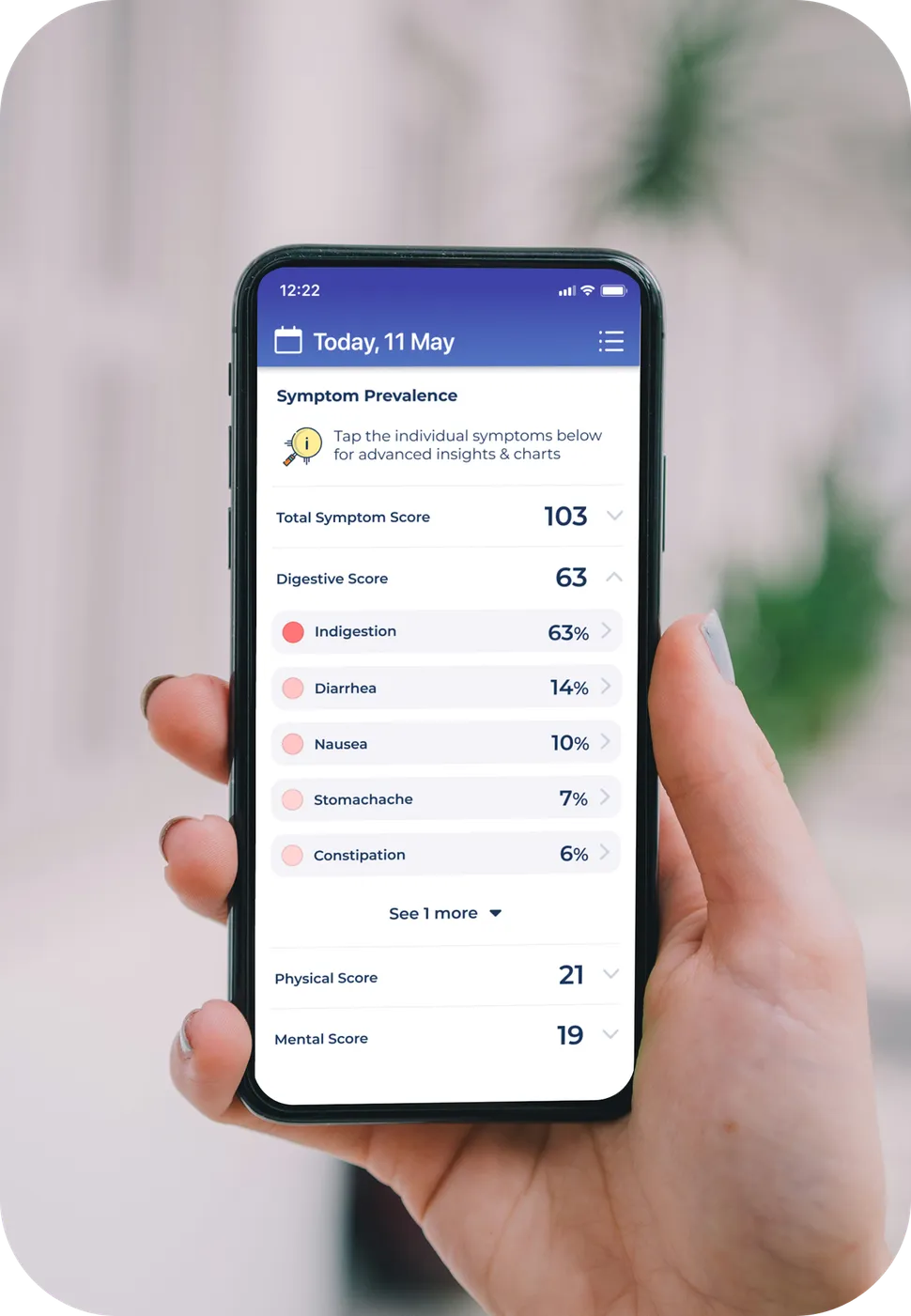
Help patients identify priority symptoms
Many patients struggle to know what to prioritise during a short medical appointment. Our app makes it easier for them to pinpoint their …
- Most prevalent symptoms
- Most severe symptoms
- Symptoms with an upward trend
- Treatment resistant symptoms
Monitor treatments and medications
Easily keep an eye on adherence, changes in symptoms, and any unwanted or unexpected side-effects.
- Side effects
- New symptoms
- Changes in existing symptoms
- Long-term outcomes
- Medication & Treatment Reminders
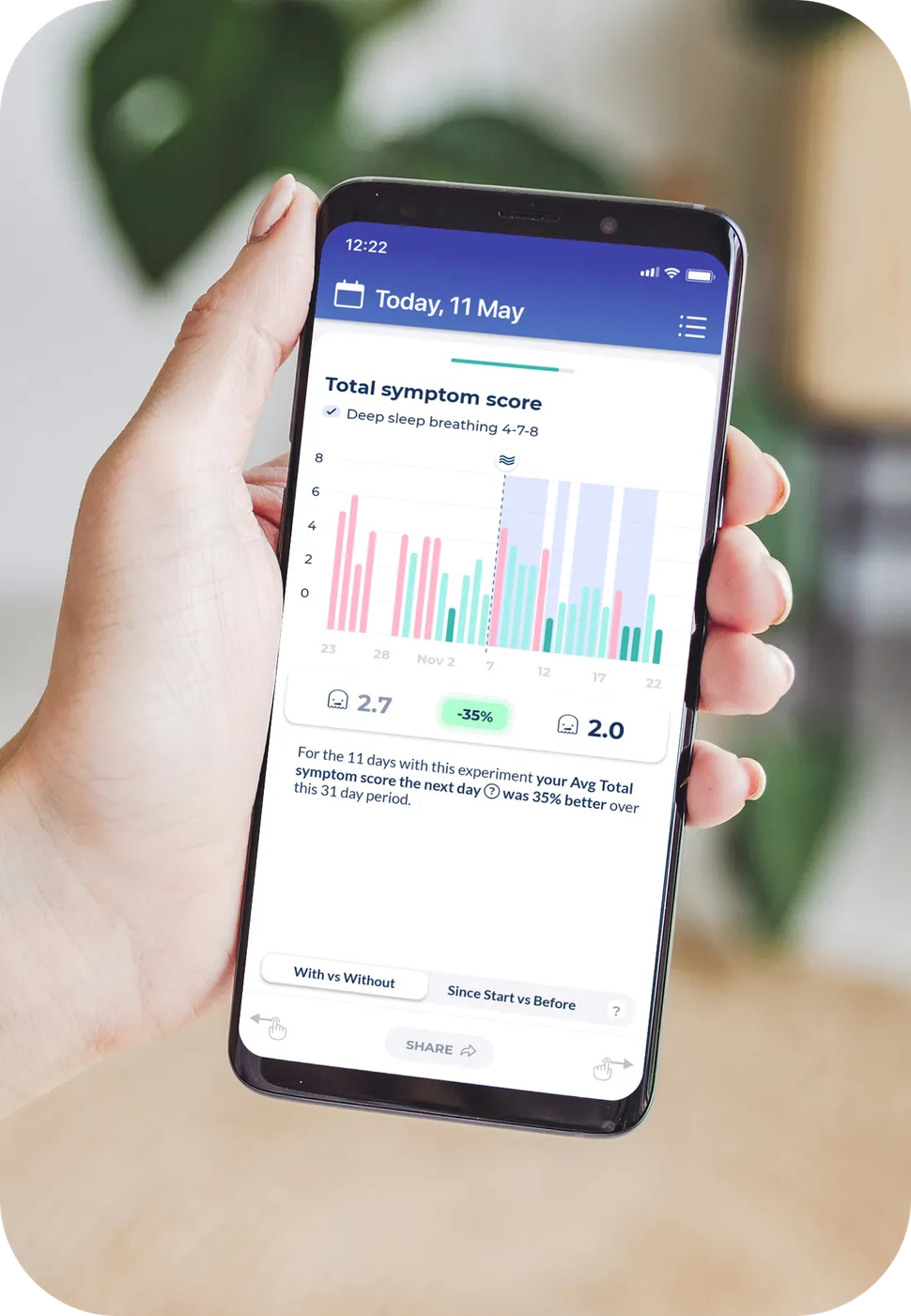
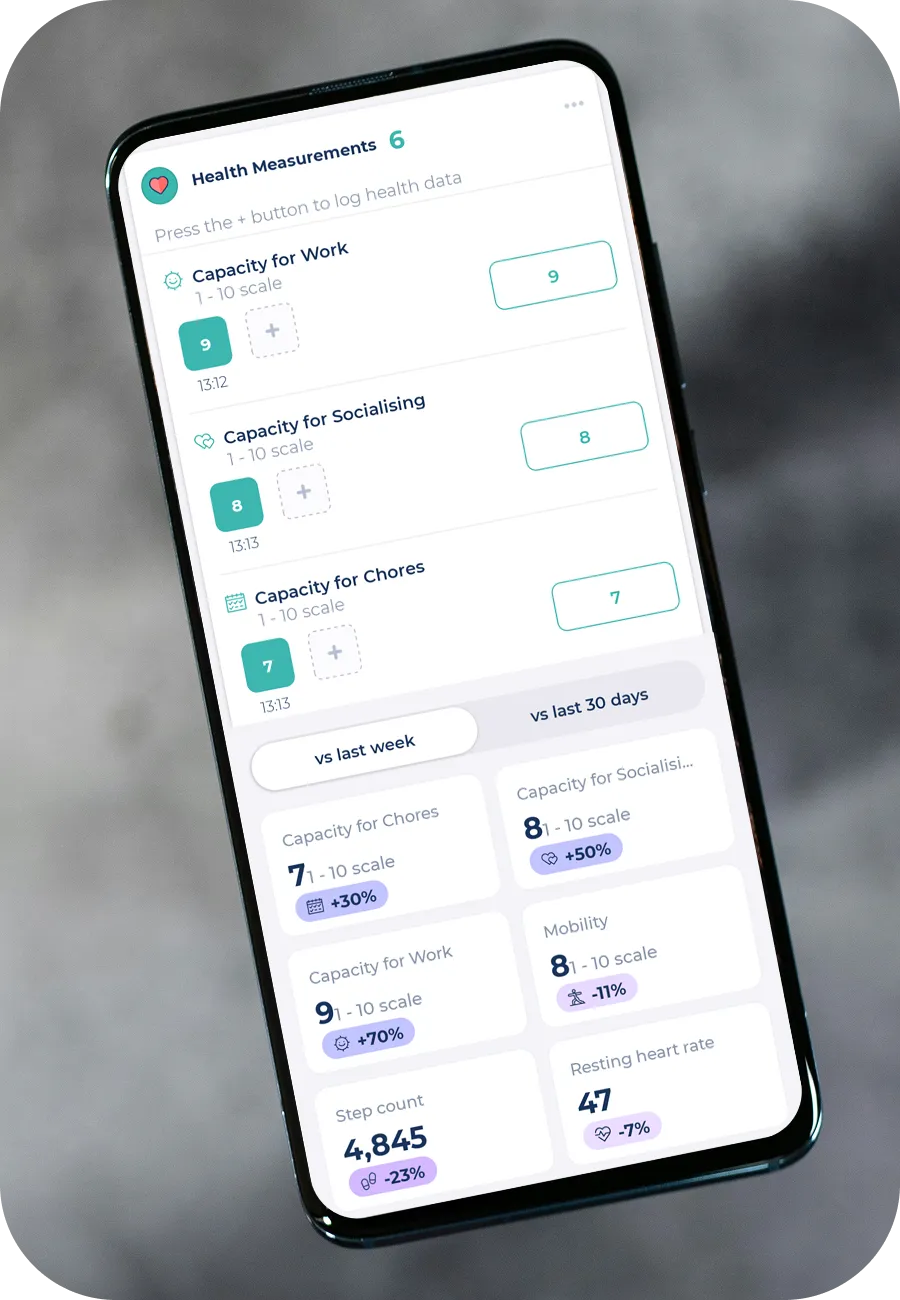
Understand their functional capacity
Bearable can be configured to help people track changes in their capacity to perform essential tasks, such as:
- Work and/or School
- Caring for & feeding themselves
- Managing everyday chores & tasks
- Mobility & Cognition
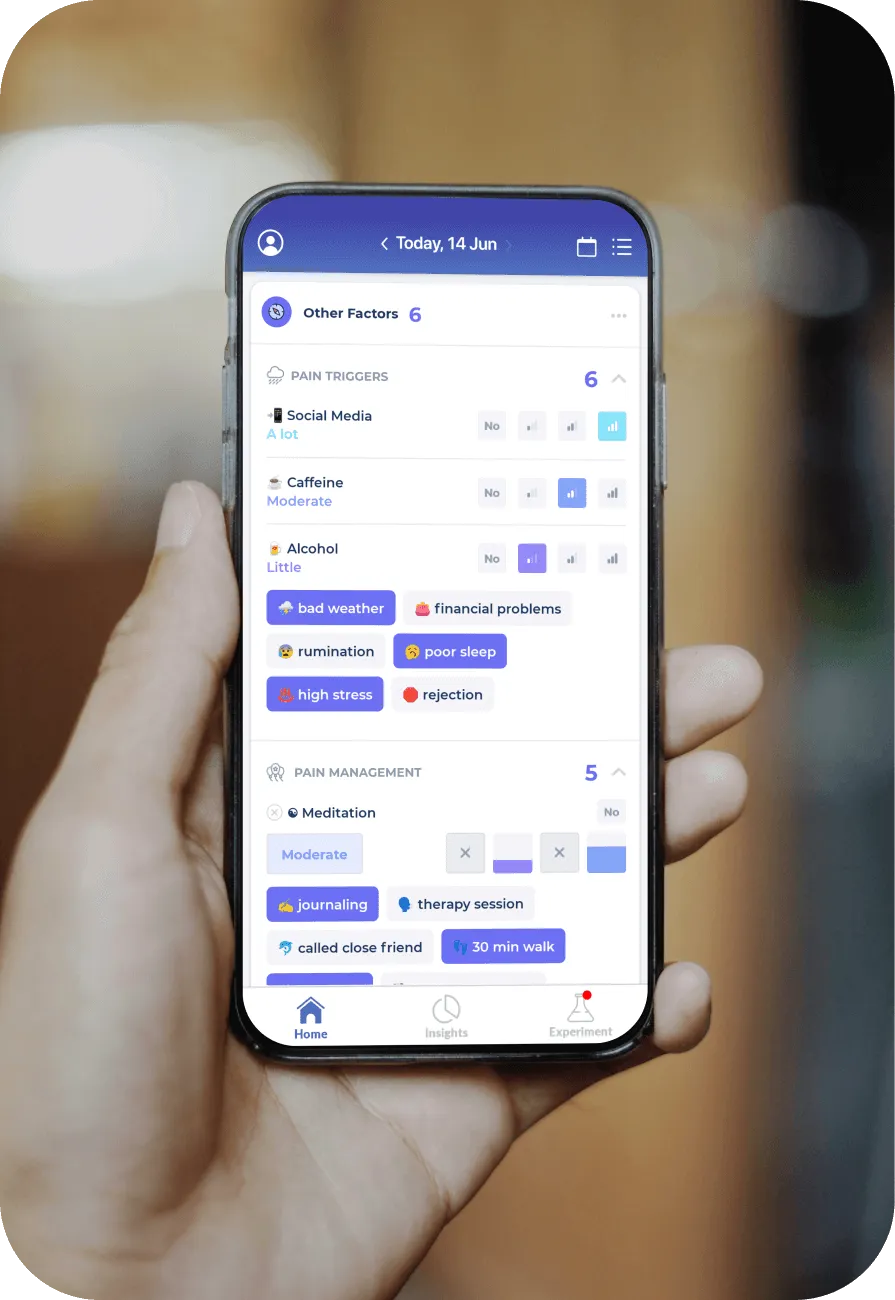
Identify lifestyle changes & events
Health and well-being often comes down to the fundamentals. Bearable makes it easy to keep track of the frequency and amount in which people partake in activities that impact their health, including:
- Alcohol & Caffeine
- Ultra Processed Foods
- Fruit & Vegetables
- Exercise & Screen time
- Sleep duration and quality
- Stressful & Traumatic events
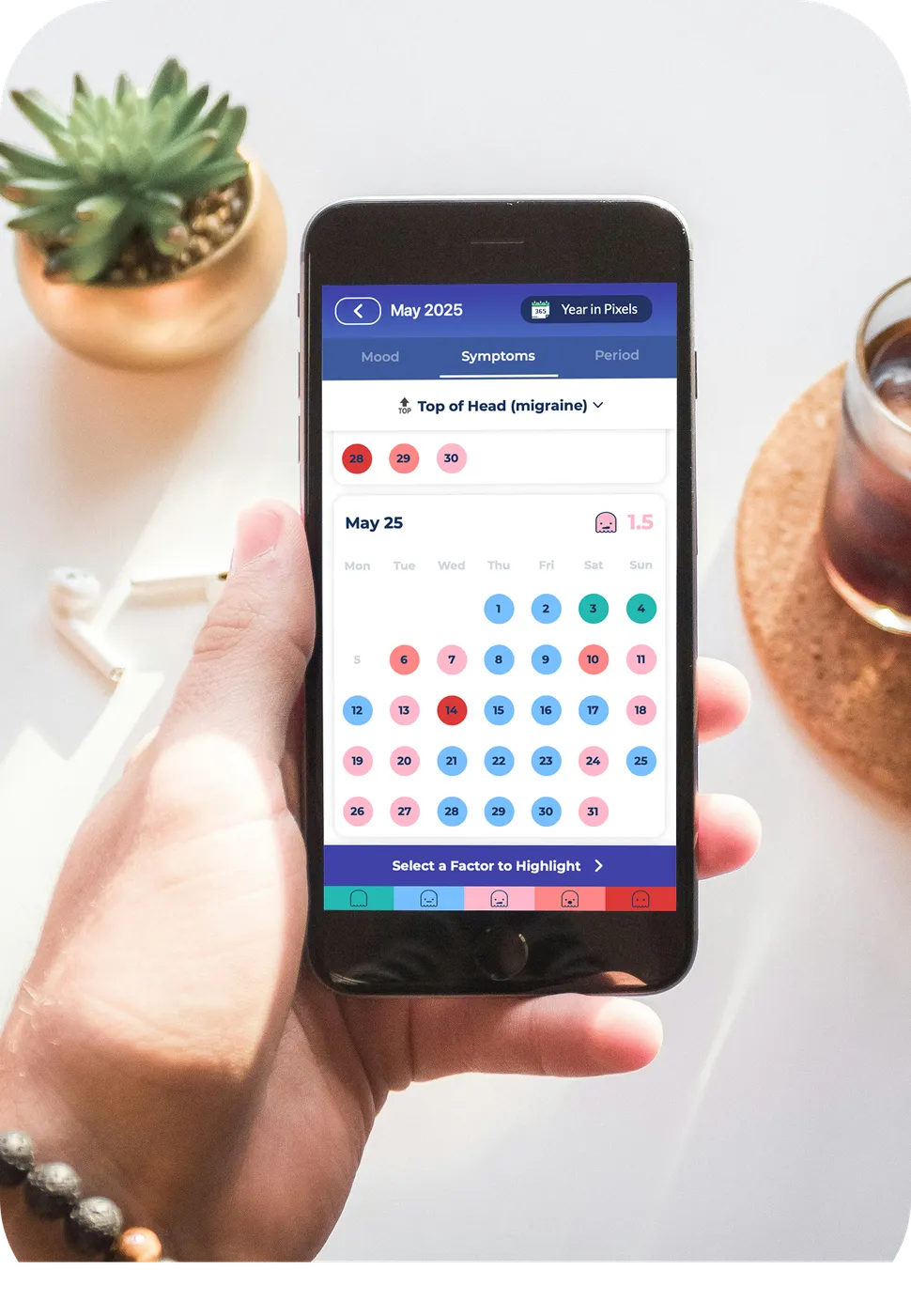
Pinpoint exact dates & emerging trends
Finding out when problems improved or worsened is easy with the multiple reporting options in Bearable:
- Calendar of symptoms, moods, & cycle
- Timeline of symptoms, meds, and lifestyle factors
- Significant events diary
- Symptoms & Moods notes
- Symptom trend reports
Monitor important health metrics
Bearable syncs with AppleHealth, GoogleFit & Fitbit so that you can easily monitor changes in: Sleep, HRV, Steps, Heart Rate, Resting Heart Rate, Weight, Blood Pressure, & more.
If you experience it, you can track it.
Track the habits and lifestyle that might impact health outcomes: exercise, processed foods, refined sugar, salt intake, soda, candy, skipping meals, cluttered spaces, lack of sleep, screen time, social media, caffeine, work, school, bright lights, stress levels, anxiety and more.
You can also create unlimited ‘custom triggers’ and track any habits you think could be causing flare ups or triggering changes in symptom/trait severity.
Track symptoms of any health condition in as much or as little detail as you’d like. Our symptom tracking tools allow you to create unlimited custom symptoms, so that you can track changes in symptom severity, frequency, and duration.
There is no limit to what you can track in Bearable, and the app can be personalised to for any combination of complex chronic illnesses.
Track any of your medications, set up medication reminders to help you adhere to your meds schedule, and spot patterns between medications and changes in symptom severity and side-effects.
Track any of your treatments and discover how they correlate with changes in your symptom/trait severity levels.
Whatever treatment program you’re on, you can track it in Bearable.
Track common self-management habits, such as:
reduced alcohol consumption, reduced caffeine intake, refined sugar consumption, journaling, planning, use of to-do lists, communicating needs, CBT, ACT, meditation, mindfulness, breath-work, reduced salt-intake, exercise, reduced screen time, reducing time on social media, omega 3-6-9, Zinc, Iron, Vitamin D, Inositol, Ginkgo Biloba supplements, and improved sleep hygiene.
With Bearable, you can create and track unlimited custom self-care and self-management tactics and view how they correlate with changes in your symptom severity.
💡 You can also create and track unlimited custom triggers, symptoms, medications, treatments, and self-management tactics.
Information for this section was sourced from The Mayo Clinic, WebMD, and the National Health Service (NHS).

Recommended by








Created by people with chronic health conditions
James, founder & CEO
Having suffered with a chronic illness since 2018, I know all too well the frustration of coming out of an appointment with my doctor or therapist knowing that I hadn’t been able to give them a complete picture of my migraine symptoms.
Often these interactions lead to no diagnosis, a very tentative diagnosis, or at worst, a misdiagnosis. From personal experience, this sets you off a wild goose chase. You go from consultant to consultant in search of answers and spend hours on Dr. Google.
In the end, I was sick and tired of feeling sick and tired. I started tracking my mood, symptoms and habits, in the hope that it would help me to understand, and feel more in control of, my health. This is how the idea for the Bearable app was born.
Since 2020, Bearable has helped me to better understand and manage my symptoms as well has help me to improve how I communicate with my medical team.
Today, my mission is to give all patients the power to take control of their health and feel like themselves again. That’s why we continue to work with hundreds of online communities to seek the advice and feedback of people with chronic health conditions.

How Symptom Trackers Can Be a Lifeline
for People with Complex Health Conditions
🔔 1. They help patients tell their story more clearly
When a patient walks into the room and says, “I’ve been having bad flare-ups lately,” that’s vague. But if they open an app and say, “I’ve logged 12 days of joint pain in the past three weeks, most of them during humid weather,” we’ve suddenly got something useful to work with.
Tracking helps patients remember what’s been happening. It replaces fuzzy recall with dates, trends, and context. That kind of detail can save you several minutes of back-and-forth during the history-taking portion of the visit—and it often reveals patterns that we might otherwise miss.
A tracker keeps a log for you—so instead of saying “I think it’s getting worse,” you can say “Over the past six weeks, I’ve had 18 pain flare-ups, mostly after high-stress days or poor sleep.”
That kind of data is hard to ignore.
🧠 2. It gives you more to go on—especially when labs are normal
We’ve all seen it: the patient whose symptoms are very real, but whose test results don’t give us much to work with. This is common with conditions like fibromyalgia, POTS, endometriosis, ME/CFS, autoimmune disorders, or early-stage neurological diseases.
When a patient brings in a record of their symptoms over time, we can sometimes spot clues that support a particular direction—timing, triggers, medication responses, or symptom clusters. That’s particularly helpful for complex cases where you’re trying to narrow down a wide differential or confirm what your clinical instincts are already suggesting.
🤝 3. It makes shared decisions easier
When you’re recommending a new medication or a lifestyle change, it helps to have a baseline. How was the patient doing before? How have things changed?
If a patient tracks their response to a new treatment—like fewer pain days or improved sleep quality—you both have a clearer sense of what’s working and what’s not. This can make conversations more collaborative. Instead of guessing or relying on “how things felt,” you’re working together with actual data. That builds trust.
♻️ 4. It helps with continuity, especially across providers
For patients seeing multiple specialists—or bouncing between primary and urgent care—a symptom tracker provides a consistent thread. It helps new providers get up to speed faster, and reduces the burden on the patient to retell their entire history at every appointment.
It also makes things easier for you if you’re inheriting a complex patient from another clinician.
☯️ 5. It doesn’t have to be complicated
You don’t need to adopt a whole new system to start benefiting from patient tracking. You might just ask your patient to email or print a weekly summary.
If you’re unsure where to start, even just asking “Have you noticed any patterns in your tracker?” can open up a richer conversation.
👂 6. It’s not about trusting the app. It’s about listening to the patient.
At the end of the day, a symptom tracker is just a tool. But for many patients—especially those with conditions that are hard to diagnose, poorly understood, or frequently dismissed—it can be a lifeline. It gives them a way to organize their experience, and it gives us a better chance to understand what they’re actually living through.
You don’t have to overhaul your workflow or analyze every data point. Just being open to what the patient brings in—and seeing it as a bridge, not a barrier—can make a real difference.
Because when patients feel heard, and we have more context, care gets better for everyone.
✅ Share Bearable Today
Unlimited Symptom & Treatment tracking is free.
However, we also have an optional subscription which gives people access to extra notes, gratitudes, custom health measurements, and correlations reports.
Share the link below to gift a 12 month subscription for just $18.99
(usual price $34.99)
FAQ
Yes, Bearable is a freemium app and our subscription is optional.
With Bearable, you can track unlimited symptoms, treatments, medications, and triggers for free. You can also identify changes in symptoms using weekly reports, timelines, calendars, and charts – all included in the free version of the Bearable app.
Bearable was designed so that people whose disposable income is affected by their chronic illnesses can still track and manage their health using the app for free.
In fact, we’ve recently launched a sponsorship program that gifts free subscriptions to members of the Bearable community every month.
Yes, one of the primary reasons we created Bearable was to make communication with your Doctor, Therapist, and Medical team easier.
Whilst it’s possible to export all of your data in .csv format, we’ve also heard from members of the Bearable community that they:
- Use the share button on certain reports to send doctors a specific report.
- Screen grab reports that don’t currently have a share button e.g. to share symptom trends from the Comparison graph or Timeline screen.
- Simply use the app during an appointment to answer questions on the spot. For example, by using the Timeline & Calendar screens to quickly lookup symptom frequency and severity for specific dates.
- Use the share button on certain reports to send doctors a specific report.
There are a number of ways in which Bearable protects the privacy and security of our member’s data. These include:
- GDPR Compliance. As a British company we’re compliant with EU data protection laws which are more protective of an individuals data rights than HIPAA. This also means that we do not have to comply with requests for data from US law enforcement.
- We use Google Cloud Platform (GCP) to backup and secure your data. GCP is GDPR and CCPA compliant and is certified under major privacy and security standards including ISO 27001 and SOC 1, SOC 2, and SOC 3.
- Your data is encrypted at rest using Google Cloud Platform services. This essentially means that your data is encrypted from your device all the way to the server. In addition to this, Google Cloud also encrypt the infrastructure, platform, and hardware that this data is stored on – so there are multiple layers of encryption protecting your data. These measures are used to protect your data from unauthorised access.
- We will never sell your data and this has been our philosophy since day one. Whilst other companies focus on revenue, our primary focus is to help people to understand and manage their health. This is the same reason we don’t show ads in the app and our only revenue stream is an optional subscription.
- We collect as little Personally Identifiable Information (PII) as possible. The only information needed to create a Bearable account is your email address. That means no name, no home address, no credit card information, no biometrics, no birthdate, and nothing else that could be used to personally identify you directly or indirectly. The only instance in which phone number data may be collected is if you choose to create an account using your Facebook/Meta account.
- Most importantly, you have complete control of your data at all times and from within the app. From the settings screen, you’re able to delete your account and/or data at any time.
- As a UK company, we’re not required to have to comply with US criminal subpoenas requesting disclosure of data.
- GDPR Compliance. As a British company we’re compliant with EU data protection laws which are more protective of an individuals data rights than HIPAA. This also means that we do not have to comply with requests for data from US law enforcement.
If you have any questions or concerns about your data privacy, please contact us at support@bearable.app
… still have questions? Get in touch and let us know.
Your Data Privacy
Just as important to us as it is to you
We'll never sell data
Unlike other companies, our main motivation will always be to help people. This is why we don’t sell your data, show in-app ads, and request as little PII data as possible.
Secure & Encrypted
Your data is encrypted and cannot be read by anyone but yourself. You have full control of your data and can export and/or delete everything from within the app at any time.
GDPR Compliant
As a British company, we comply with EU/European data protection and privacy laws. This also means we’re not required to comply with data requests from US law enforcement.